
Chayei Sarah brings death, marriage, grief, and love. Families come full circle, a new generation emerges, and forgiveness lurks just beneath the surface.
-
While the parsha is called Chayyei Sarah (“The Life of Sarah”), it opens as Sarah dies - “this is the life of Sarah.”
After a time of mourning, Avraham seeks a place to bury Sarah, in Hevron, then the land of the Hittim (Hittites). The people of the land offer him a site, yet he insists on buying it; after much back and forth, he purchases the Cave of Machpelah as a burial plot.
Advancing in years himself, Avraham sends his servant, Elazar, to find a wife for Itzhak (Isaac); he doesn’t want him to marry a Canaanite woman. He tells Elazar to look for a sign, and he’ll know it’s the right woman - but if he doesn’t get her consent, he is free of the obligation.
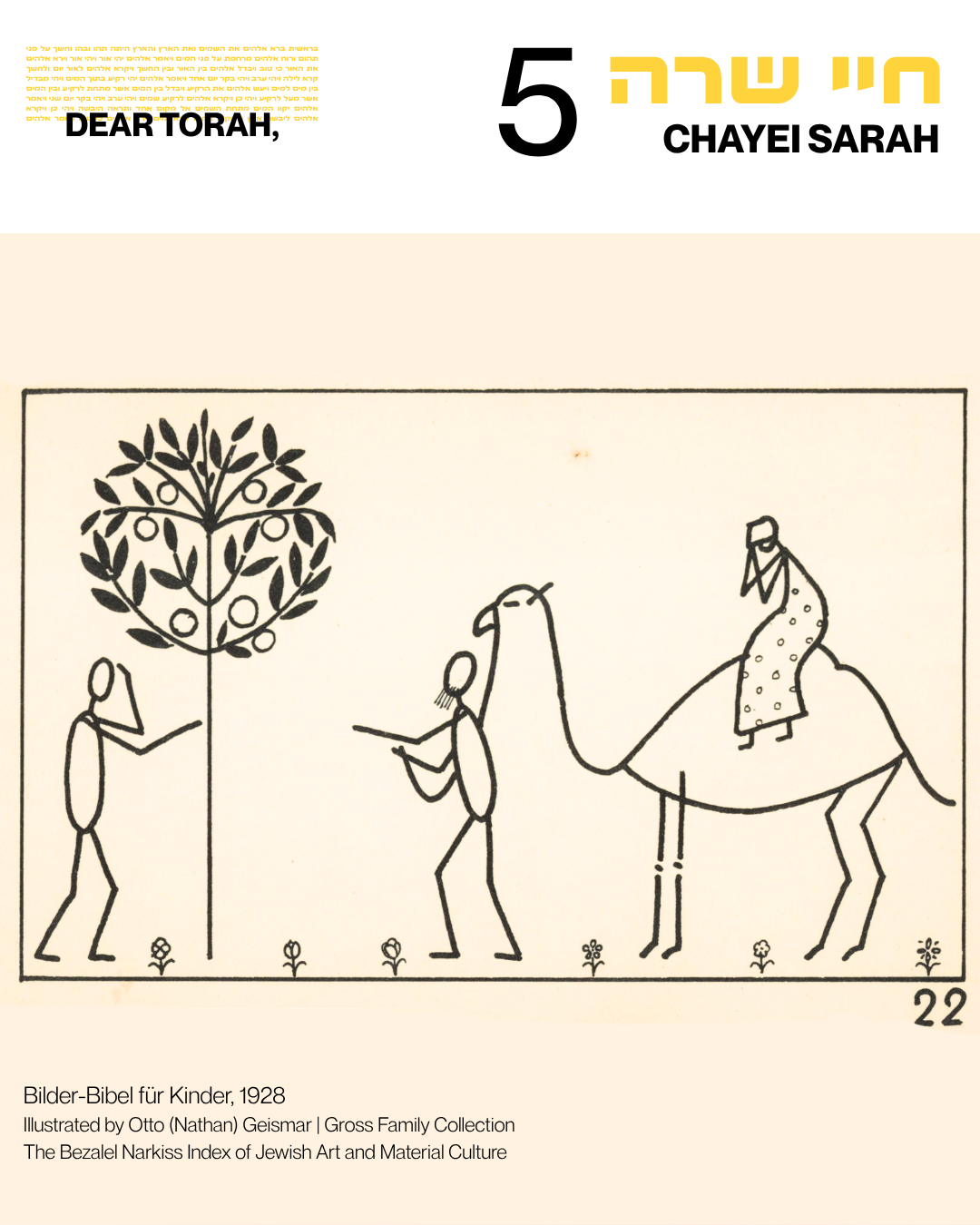
Elazar sets out to the land of Avaraham’s past, where he encounters a woman at the well. She offers him water, and then more water to his camels to drink, thirsty from their journey. Elazar takes this as a sign, and returns to her home with her, where he meets the family. He shares his story, and the family agrees: Rivka will go back with Elazar to marry Yitzhak.
Yitzhak is struck by Rivka’s beauty and loves her; meanwhile, Avraham remarries, has more children, and dies happy and surrounded by the people he loves. Together, Yitzhak and Ishmael bury their father, Avaraham.
The parsha closes with the death of Ishmael, gathered around his family, just like his father.
Writer’s Path: Avraham loses his wife Sarah; Rivka chooses to leave her family and follow Elazar to marry Yitzhak; Ishmael comes back to bury his father, Avraham. Explore these moments of loss, grief, and hope. Write a short note of comfort that gives a character from this story permission to forgive or move on.
Visual Path: When Elazar is sent to find a wife for Itzhak (Isaac), he finds his sign in Rivka’s (Rebecca) generosity: the gift of water at the well. Find or create an image of water in an unexpected place or form.